
Triaxiom Security
Partner with us to meet your Information Security needs.
  • About Us
  • Services
    • Penetration Testing
    • Compliance Audit
    • Strategic Consulting
  • Blog
    • Penetration Test
    • PCI Compliance
    • Best Practice
  • Contact Us
threat modeling
2 Dec 2019

Threat Modeling for Penetration Testers

Threat modeling is a term thrown around in a lot of different contexts, but it can sound daunting if your unfamiliar with it in practice. It really just refers to identifying what threats an organization, a target network, or an in-scope application should be worried about. For penetration testers, you are modeling (mapping out) the […]

cross-site scripting - from OWASP
26 Nov 2019

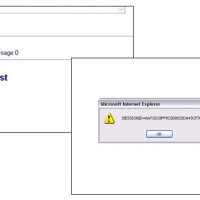
Common Web Application Vulnerabilities – Cross-Site Scripting

As we continue our series explaining some of the most common web application vulnerabilities we encounter during penetration tests, we arrive at cross-site scripting (XSS). XSS comes in at number 7 on the most recent OWASP Top 10 release, so it is still an issue for a significant number of applications and organizations. Caused by […]

Does SOC 2 require penetration testing?
22 Nov 2019

Does SOC 2 Require Penetration Testing?

Does SOC 2 require penetration testing or vulnerability scanning? This is a great question and one that we get asked frequently. Today, we will explore the interpretations of the requirements and our recommended approach. What is SOC 2? Developed by the American Institute of CPAs, SOC 2 defines criteria for managing customer data based on […]

OWASP API Security Top 10
20 Nov 2019

OWASP API Security Top 10

APIs, or application programming interfaces, allow different platforms, apps, and systems to connect and share data with each other. They are used by IoT devices, mobile applications, traditional web applications, and almost every website that communicates directly with other applications. As a result, it is no surprise that the use of APIs has grown immensely […]

bind vs reverse payloads
18 Nov 2019

Command and Control: Bind vs Reverse Payloads

In today’s blog, we are going to learn a key concept related to how an attacker gains a foothold on your network: the difference between a bind and reverse payload. Attackers typically get an initial foothold by exploiting a vulnerability that allows them to execute code on a target. This can be through a web […]

authentication weaknesses
14 Nov 2019

Common Web Application Vulnerabilities – Authentication Weaknesses

As we continue our mini-series addressing some of the most common web application vulnerabilities we see during assessments, we turn our attention to the broad category of authentication weaknesses next. The OWASP Top 10 identifies this category as number 2 on its list, meaning it is obviously well known and prevalent. So then why are […]

authorization bypass
12 Nov 2019

Common Web Application Vulnerabilities – Authorization Bypass

As we continue to try and share knowledge we’ve gained in our time performing penetration testing, we’re going to focus on another common web application vulnerability I keep running into. Authorization bypass is number 5 on the OWASP Top 10, further demonstrating that this continues to be a common issue plaguing web applications. The biggest […]

A message of support for Coalfire
8 Nov 2019

Standing with Coalfire

As many of you are most likely aware of by this point, two Coalfire employees are facing criminal trespassing charges in Iowa. The two employees were conducting a physical penetration test against a judicial branch building and the Dallas County courthouse. As part of their assessment, they gained access to the courthouse and intentionally tripped […]

Does the NCUA require penetration testing
6 Nov 2019

Does the NCUA Require Penetration Testing?

The National Credit Union Administration or “NCUA” was established to “provide, through regulation and supervision, a safe and sound credit union system, which promotes confidence in the national system of cooperative credit.” As one could imagine, IT infrastructure and the information security program is one of the critical pillars that are required to be audited. […]

username enumeration
4 Nov 2019

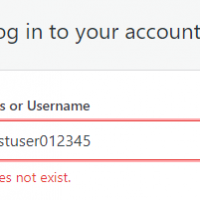
Common Web Application Vulnerabilities – Username Enumeration

Throughout our assessments, we get the opportunity to work with a wide variety of clients and see a ton of different web applications. When performing web application penetration testing in particular, there are a number of issues that we notice over and over again, regardless of the development language, application architecture, etc. If we see […]

«‹ 15 16 17 18›»

Looking for something specific?

Recent Posts

  • aws s3 sse-c deprecationAWS S3 SSE-C Today, Gone Tomorrow
  • Screenshot 2026-01-16 at 11.13.27 AMAWS CodeBreach: A Close Call For All
  • hidden-dangers-in-cloudCommon Security Dangers Lurking in Cloud Environments

Categories

Most Discussed

API Penetration Test AWS Best Practice Checklist Cloud Cloud Security Cloud Security Assessment Common Vulnerabilities comparison COMPLIANCE configuration review Core Values Cost Current Events Education External Penetration Test firewall HIPAA improvement Incident Response Internal Penetration Test methodology Passphrase Passwords Password Security PCI PCI DSS PCI QSA penetration test Physical Penetration Test Problems QSA Quick Tips Regulation Remediation Report Risk Security Awareness Small Business SMB Social Engineering vetting vulnerability Web Application Penetration Test wireless
Back to top
Triaxiom Security
© 2025 Triaxiom Security, a division of Strata Information Group, Inc. All rights reserved.
Privacy Policy